 yoyicassia@hotmail.com
Hollow Metal Steel Flush Door
What Is a Hollow Metal Steel Flush Door?
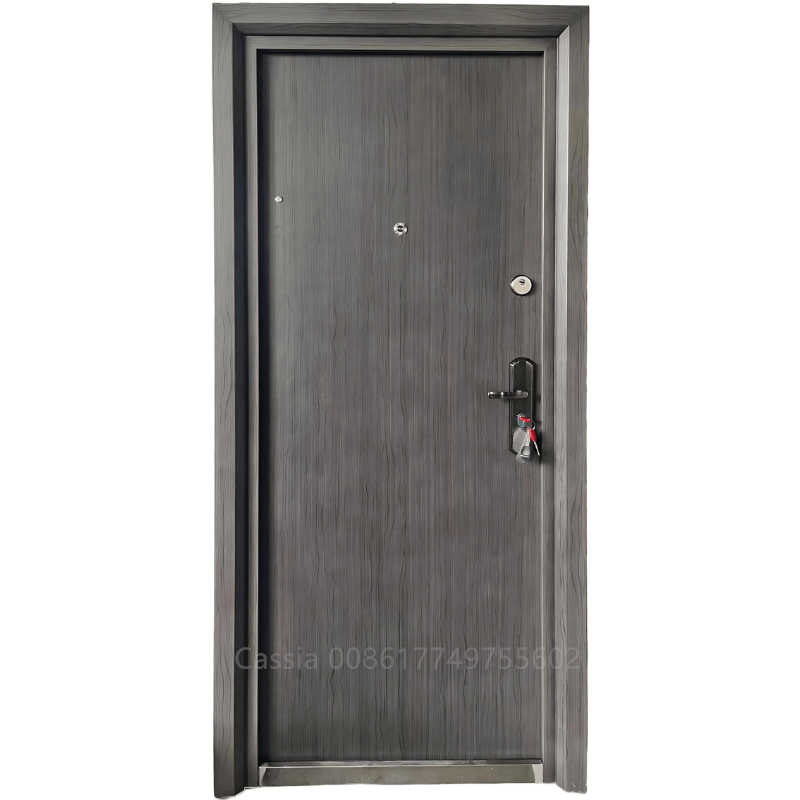
A hollow metal steel flush door is a steel door constructed with a steel face sheet and an internal core or reinforcement system. Unlike decorative embossed doors, a flush door features a flat, smooth exterior surface that creates a modern and professional appearance.
The steel skin can be manufactured from galvanized steel or other suitable steel materials according to the required application. The door can also be configured with different cores, thicknesses, hardware preparations, finishes, and dimensions.
Hollow Metal Door Construction
The performance of a hollow metal steel flush door depends on the quality of its components and manufacturing process.
A typical door assembly may include:
Steel Door Skin → Internal Core/Reinforcement → Edge Construction → Hardware Reinforcement → Surface Finish
The steel face sheets form the visible exterior of the door. Internal reinforcement or core materials provide structural stability, impact resistance, and the required performance characteristics.
Reinforced areas can be provided around hinges, locks, door closers, panic devices, and other hardware to improve the overall strength of the door assembly.
Steel Gauge Options
Hollow metal doors are manufactured using different steel thicknesses (gauges) to match specific application requirements:
20 Gauge: Light to standard duty applications, such as interior commercial spaces, outbuildings, and residential fire-rated installations .
18 Gauge: Standard commercial applications offering enhanced durability .
16 Gauge: Heavy-duty applications requiring maximum strength and impact resistance .
14 Gauge: Maximum duty applications for high-traffic or security-sensitive areas .
The gauge selection directly impacts the door’s resistance to impact damage, with heavier gauges providing superior protection against forced entry and accidental impacts .
Core Systems
The internal core provides essential structural and functional properties:
Honeycomb Core: The industry standard, offering excellent structural integrity while minimizing weight. The honeycomb cell structure with sanded surfaces ensures unfailing adhesion to steel face sheets. This core type also helps prevent thermal bowing from direct sun exposure, particularly important for lighter color doors .
Polystyrene Core: Provides enhanced insulation performance and impact resistance. This core option delivers improved thermal efficiency while maintaining structural strength .
Polyurethane Core: Offers superior thermal performance for applications requiring maximum energy efficiency .
Hollow Metal Steel Flush Door Manufacturing Process
A typical manufacturing process includes several important stages.
Step 1: Steel Sheet Preparation
Steel coils or sheets are selected according to the required material and thickness. The sheets are cut to the specified door dimensions.
Step 2: Forming and Bending
The steel sheets are formed and bent to create the required door profile and edge structure.
Step 3: Hardware Reinforcement
Reinforcement components are installed in areas requiring additional strength, including hinges, locks, closers, and other hardware.
Step 4: Core Installation
The specified core or internal reinforcement system is installed inside the door leaf.
Step 5: Door Assembly
The steel face sheets and internal components are assembled to form the complete door leaf.
Step 6: Surface Treatment
The door surface is cleaned and prepared for the selected coating or finishing system.
Step 7: Quality Inspection
Finished doors are inspected for dimensions, surface quality, construction accuracy, hardware preparation, and other customer specifications.
How to Choose the Right Hollow Metal Steel Flush Door
When selecting a hollow metal flush door, consider the following factors:
- Application – Determine whether the door will be used in a commercial, industrial, institutional, or residential environment.
- Door Size – Confirm the required width, height, and thickness.
- Steel Thickness – Select an appropriate steel thickness based on strength and application requirements.
- Core Type – Choose the internal core according to insulation, acoustic, fire, or structural requirements.
- Hardware – Confirm hinge, lock, closer, panic hardware, and other preparations.
- Surface Finish – Select galvanized, primed, painted, powder-coated, or other suitable finishes.
- Performance Requirements – Check whether fire, acoustic, security, corrosion, or other performance ratings are required.
- Standards and Certification – Make sure the complete door assembly complies with the standards required in the target market.