- 3000+ Patterns Are Available
- 008617749755602
- yoyicassia@hotmail.com

Metal Sheet Door Design: Modern Steel Door Panels and Decorative Door Skins
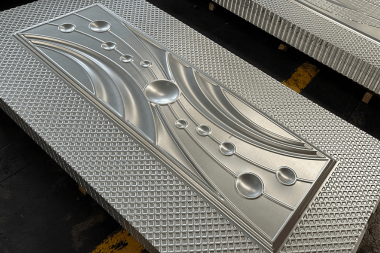
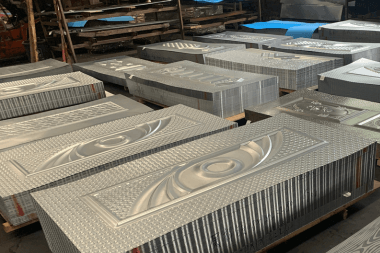
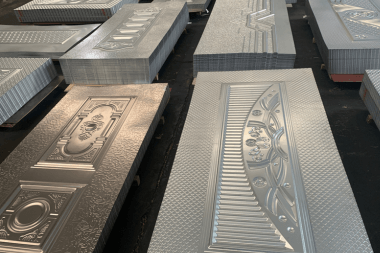
Metal sheet door design is an important part of modern steel door manufacturing. By using stamping, embossing, pressing, and forming technology, flat metal sheets can be transformed into attractive door panels with raised patterns, recessed sections, geometric lines, and decorative textures.
Metal sheet door designs are widely used for residential entrance doors, security doors, apartment doors, commercial buildings, hotels, offices, and industrial facilities.
For steel door manufacturers, choosing the right metal sheet door design can improve both the appearance and marketability of the finished door while maintaining an efficient manufacturing process.
What Is a Metal Sheet Door Design?
A metal sheet door design refers to the pattern, structure, texture, and decorative configuration formed on a metal sheet used for a door.
Unlike a simple flat steel sheet, a designed metal door panel can feature three-dimensional shapes created through stamping or embossing.
Common designs include:
- 6-panel door designs
- 4-panel door designs
- Raised panel doors
- Recessed panel doors
- Geometric steel door designs
- Modern minimalist patterns
- Vertical line designs
- Horizontal groove designs
- Decorative embossed patterns
- Textured metal surfaces
- Custom door patterns
These designs can be manufactured from cold rolled steel, galvanized steel, stainless steel, or other suitable sheet metals.
Popular Metal Sheet Door Designs
1. 6 Panel Metal Door Design
The 6 panel metal door design is a classic choice for residential and exterior doors.
The door sheet is stamped or embossed to create six individual raised or recessed panels.
This design combines a traditional panel-door appearance with the durability of a steel construction.
2. 4 Panel Steel Door Design
A 4-panel design provides a simpler appearance than a six-panel door.
It is suitable for:
- Residential doors
- Apartment doors
- Interior steel doors
- Commercial doors
- Utility doors
3. Modern Geometric Metal Door Design
Modern metal doors often use clean geometric shapes and straight lines.
Popular patterns include:
- Rectangles
- Squares
- Vertical grooves
- Horizontal lines
- Parallel sections
- Asymmetrical geometric patterns
These designs are particularly suitable for contemporary architecture.
4. Minimalist Metal Sheet Door Design
Minimalist doors use simple patterns with limited decorative elements.
A few deep lines or recessed sections can create a modern appearance while keeping the manufacturing process relatively straightforward.
5. Decorative Embossed Metal Door Design
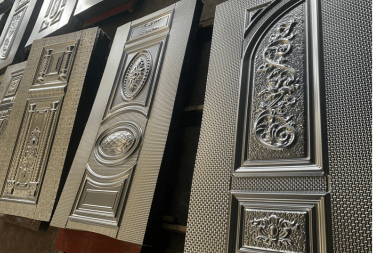
Embossed metal sheets can feature decorative patterns with raised and recessed areas.
These patterns can be designed according to the target market or customer’s architectural requirements.
Materials Used for Metal Door Sheets
The material selected for a metal door sheet affects its formability, durability, surface quality, and finishing options.
Cold Rolled Steel
Galvanized Steel
Galvanized steel has a zinc coating that provides additional corrosion protection.
A galvanized steel door skin can be suitable for exterior doors and environments where moisture resistance is important.
Stainless Steel
Stainless steel can be used for premium architectural doors and applications requiring higher corrosion resistance.
It is generally more expensive than conventional steel and should be selected according to project requirements.
Metal Sheet Door Design Manufacturing Process
The manufacturing process depends on the design and production requirements.
Step 1: Steel Sheet Preparation
Steel coils or sheets are selected according to the required material, thickness, width, and surface condition.
Step 2: Cutting
The metal sheet is cut to the required door panel dimensions.
Accurate cutting ensures proper positioning during forming and assembly.
Step 3: Leveling
When coil material is used, a leveling machine can be used to improve sheet flatness before stamping.
Step 4: Stamping or Embossing
The prepared sheet is positioned in a customized die.
A hydraulic or mechanical press applies pressure to form the required door design.
This process can create:
- Raised panels
- Recessed panels
- Grooves
- Decorative lines
- Geometric patterns
- Textured surfaces
Step 5: Trimming
The formed panel is trimmed to the required final dimensions.
Step 6: Punching and Edge Processing
Additional holes, slots, and edge treatments can be added according to the door assembly requirements.
Step 7: Surface Finishing
Metal door sheets can be finished using:
- Powder coating
- Spray painting
- Wood-grain finishing
Metal Sheet Door Design for Security Doors
Metal sheets are commonly used as the exterior skins of security-oriented door systems.
A security door may include:
- Steel door skins
- Reinforcement structure
- Steel frame
- Door core
- Heavy-duty hinges
- Locking system
- Door hardware
The metal sheet door design provides the exterior surface, while the complete door construction determines the overall strength and security characteristics.
Embossed designs can therefore combine decorative appearance with a robust steel door structure.
Applications of Metal Sheet Door Designs
Metal door sheets can be used in many applications:
- Residential entrance doors
- Security doors
- Apartment doors
- Villa doors
- Office doors
- Hotel doors
- Commercial doors
- Industrial doors
- Warehouse doors
- Interior steel doors
- Exterior steel doors
- Decorative metal doors
The material and design can be selected according to the specific application.
How to Choose the Best Metal Sheet Door Design
When selecting a design, consider the following factors:
Application: Residential, commercial, industrial, or security use.
Material: Cold rolled steel, galvanized steel, or stainless steel.
Thickness: Select according to the complete door structure.
Pattern: Choose a design suitable for the architectural style.
Embossing Depth: Ensure the material and die can achieve the required forming depth.
Surface Finish: Consider powder coating, painting, galvanizing, or decorative finishes.
Production Volume: High-volume production may benefit from automatic feeding and dedicated stamping dies.
Frequently Asked Questions
What is a metal sheet door design?
A metal sheet door design is a pattern or configuration formed on a steel or metal sheet used to manufacture a door. It can include raised panels, recessed sections, grooves, geometric patterns, and decorative textures.
What metal is best for door sheets?
Cold rolled steel and galvanized steel are common choices. The best material depends on the door application, forming requirements, corrosion protection, and surface finish.
Can metal door sheets be customized?
Yes. Custom metal door sheets can be produced according to CAD drawings, DXF files, samples, or customer design requirements.
Can a metal sheet be embossed for a door?
Yes. Steel sheets can be embossed or stamped using customized dies to create three-dimensional door patterns.
What is a 6 panel metal door?
A 6-panel metal door features six raised or recessed sections formed into the metal door sheet. It is a popular classic design for residential and exterior doors.
Are metal door sheets suitable for security doors?
Yes. Metal door sheets can be used as the exterior skins of security doors. However, the overall security performance depends on the complete door system, including the frame, reinforcement, locks, hinges, core, and installation.
Conclusion
Metal sheet door design combines metal-forming technology with architectural styling to create durable and attractive door panels.
Through stamping, embossing, and pressing, manufacturers can produce 6 panel steel door skins, modern geometric panels, decorative embossed door skins, textured steel sheets, and customized metal door designs.
For manufacturers, the right combination of steel material, sheet thickness, stamping die, press capacity, and surface treatment can provide an efficient solution for producing a wide range of steel door products.
With custom tooling and flexible production capabilities, metal sheet door designs can be developed for residential, commercial, security, and industrial applications in both domestic and international markets.